Warranty registration has become a standard practice across many industries, but not every product or business truly benefits from implementing it. The decision to require or encourage registration is strategic. It weighs customer data collection and fraud prevention against the friction it adds to the customer experience. Zendesk's CX Trends report puts the bar high: 73% of customers expect instant access to warranty information.
This guide covers when warranty registration makes genuine business sense and when it works against the brand's goals.
Understanding Warranty Registration
Warranty registration is the process where customers provide their information and proof of purchase to activate or register their product warranty. This can be mandatory (required to activate coverage) or optional (warranty is valid regardless, but registration offers benefits). Registration programs must also comply with GDPR data protection requirements.
Warranty registration makes the most sense when you sell through third parties but want a direct relationship with end customers.
If you're a supplier selling through retailers, marketplaces, or distributors, you face a fundamental problem: the retailer owns the customer relationship. You don't know who bought your product, where they live, or how to reach them.
Warranty registration solves this. In exchange for product protection and peace of mind, customers give you:
- Marketing permission for future campaigns
- First-party data that reduces reliance on paid ads
- Direct communication channels that bypass intermediaries
Benefit 01
First-party customer data
Direct visibility into who's actually using the product, regardless of where they bought it.
Benefit 02
Marketing opt-in capture
GDPR-compliant consent collected at the highest-engagement moment in the customer journey.
Benefit 03
Faster claim resolution
Purchase date, retailer, and product details already on file. No proof-of-purchase chase.
Benefit 04
Fraud protection
Documented purchase trail prevents serial claimers and unauthorised-channel claims.
.webp)
Benchmark your warranty process in 3 minutes
14 questions. Instant score. Actionable recommendations to reduce claim handling time.
When Warranty Registration Delivers Maximum Value
Not every product or business benefits equally. Warranty registration works best when:
1. Your Products Have Long Lifecycles and High Value
Warranty registration is particularly valuable for products with significant purchase prices and extended lifespans. Consider appliances, electronics (according to Consumer Reports, electronics are among the most frequently registered products), power tools (AHAM provides industry standards for warranty programs), or furniture that customers will own for years or even decades.
Customers of high-value items are more willing to spend a few minutes registering in exchange for warranty protection. The investment they've made justifies the minor inconvenience, and they're motivated to ensure their coverage is valid.
A real-world example: commercial espresso machine manufacturers see registration rates well above category averages. Customers spending $3,000+ on equipment want documented warranty protection.
2. You Operate Across Multiple Sales Channels
Selling direct-to-consumer and through retail partners? Warranty registration creates a unified customer database regardless of where the purchase happened.
Why it matters: Without registration, your DTC customers have accounts and profiles. Your retail customers are invisible. Registration levels the playing field and gives you visibility into your entire customer base, not just the fraction who buy directly from you.
3. Products Prone to Warranty Fraud
If your industry experiences significant warranty fraud, including serial claimers, counterfeit products, or fraudulent purchase claims, registration serves as a critical verification layer. WarrantyWeek tracks warranty expense trends across industries.
Why it matters: Registration creates a documented trail linking the customer to the purchase date, retailer, and product serial number. This makes it much harder to file false claims or claim warranty coverage on products purchased through unauthorized channels. The cost of fraud prevention must outweigh the customer friction introduced by mandatory registration.
4. You Want to Offer Extended Warranties or Upsells
Warranty registration is a revenue opportunity. Customers who register their base warranty are prime candidates for extended coverage, accessories, or complementary products.
Why it matters: The moment after purchase is the best time to offer extensions or add-ons. The product has just arrived and excitement is high. Registration captures that moment and creates a natural touchpoint for additional sales without feeling pushy.
5. Products Requiring Safety Recalls or Updates
For products that may need direct customer contact for safety recalls, firmware updates, or product modifications, registration is critical. Both for consumer safety and for legal liability. The U.S. Consumer Product Safety Commission manages product recalls and safety notices. In Europe, the Safety Gate rapid alert system tracks dangerous products.
Direct channels built through registration allow brands to reach affected customers quickly. No general announcements or retailer middlemen. This applies to automotive parts, children's products, electrical devices, smart home technology, and any product with software or connectivity features requiring updates.
6. Compliance or Multi-Market Complexity Requires It
Many brands operate across regions with different warranty periods. 2 years in the EU, 3 years in Spain, 1 year for pro users vs. 2 years for consumers. Registration applies the correct terms automatically based on product, location, and customer type. The EU's consumer rights directive mandates minimum 2-year warranties. Spain extended its warranty period to 3 years as of January 2022.
Why it matters: Manual warranty management across markets creates errors, compliance risk, and slow claim resolution. Registration automates the rules and ensures you're applying the right warranty terms to the right customers without manual intervention or mistakes.
7. Your Support Team Wastes Time Chasing Proof of Purchase
If your CS team constantly asks customers to dig up receipts from a year ago, warranty registration eliminates that delay by having customers register once. The proof of purchase is saved at the moment of registration, ready for any future claim.
Why it matters: Faster claims resolution. Lower support costs. Better customer experience. Research from McKinsey shows that early detection of quality issues can reduce warranty costs by 20-40%.
8. Complex Products Benefiting from Onboarding
Products with steep learning curves benefit naturally from registration programs. The same is true for products that need educational content or extra support.
Why it matters: You can tie registration to value-added services like tutorial videos, personalized setup guides, customer support access, or extended warranty options. The registration process becomes part of the customer journey rather than an obstacle. This approach turns registration from a company benefit (data collection) into a customer benefit (improved product experience).
9. B2B and Professional Products
Professional and commercial users generally have different expectations and motivations than retail consumers. They often require documented warranty coverage for accounting, insurance, or operational purposes.
Why it matters: Business customers expect administrative processes and often have dedicated personnel for equipment registration and documentation. The barrier to registration is much lower, and the value proposition is clearer.

Industries where warranty registration delivers the most value
Electronics & appliances
Power tools
Outdoor & sporting goods
Furniture
Children's products
B2B equipment
What Makes a Warranty Registration Program Actually Work
Make It Effortless
QR codes on packaging that pre-populate product details. One-click registration for ecommerce orders. Mobile-first design. QR code usage has grown sharply since 2020 according to Bitly. Mobile-friendly interfaces and pre-filled fields raise completion rates sharply. Keep required information to the minimum. Provide multiple registration methods, online, mail-in, phone, to accommodate different customer preferences and technical capabilities.
Offer Clear Value
"Register to activate your warranty" is weak. "Register to extend your warranty from 1 year to 2 years" or "Register to get priority support and exclusive offers" drives action.
Explain exactly what customers gain by registering. Be transparent about data usage and provide clear privacy policies. Customers are increasingly sensitive about how their information is used and shared. The most successful approaches recognize that warranty registration should serve both business interests and customer needs.
Integrate with Claims
The real ROI comes when registration data flows directly into your claims process. Customers shouldn't re-enter information. Agents shouldn't toggle between systems. One source of truth.
When done right, warranty registration leads to stronger customer relationships and better product experiences. Your claims team should be able to pull up complete customer and product history instantly, making resolution faster and more accurate.
The Middle Ground: Optional Registration with Incentives
Many successful warranty programs take a hybrid approach, making registration optional but incentivized. This strategy captures willing participants without alienating customers who resist additional steps.
Effective incentives include:
- Extended warranty periods (1 year standard, 2 years with registration)
- Priority customer support access
- Exclusive product information and updates
- Discounts on accessories or future purchases
- Entry into prize drawings or loyalty programs
- Early access to new products or features
This approach respects customer choice. It still captures valuable data from customers who see clear value in the exchange. Registration rates may be lower than mandatory programs, but the quality of data is often higher, these are customers actively choosing to engage with your brand.
Should You Build or Buy?
Building warranty registration in-house sounds simple. A form, a database, some emails. But the complexity sneaks up on you:
- Multi-language support for global operations
- Region-specific warranty rules and compliance
- Proof-of-purchase validation and fraud detection
- Integration with your claims system
- Extended warranty payment flows
- GDPR and privacy compliance (Non-compliance can result in fines up to €20 million or 4% of annual revenue)
- Mobile optimization and QR code generation
- Email automation and customer communications
- Analytics and reporting dashboards
- API connections to ecommerce platforms and retail partners
What starts as a simple form quickly becomes a serious engineering project. It needs ongoing maintenance and updates as regulations change and the business evolves.
How Claimlane Solves Warranty Registration
Claimlane's warranty registration is built specifically for brands and retailers who sell across multiple channels and need complete visibility into their warranty operations.
Registration That Customers Actually Complete
Most customers skip warranty registration because it's complicated and time-consuming. Claimlane's registration portal takes less than a minute to complete, with mobile-optimized forms, QR code scanning to pre-populate product details, and minimal required fields. The result? Registration completion rates that are 3-5x higher than traditional forms.
One Dashboard for All Warranty Registrations
Selling through retailers, marketplaces, and your own store? Claimlane centralises every warranty registration across sales channels. The result is a complete view of the customer base, not just the fraction who buy directly. No more blind spots in your retail channel.
Integration with Claims Management
The registration data flows directly into Claimlane's claims management system. When a customer files a warranty claim, your support team instantly sees the complete history: purchase date, retailer, product details, and warranty terms. No re-entering information. No toggling between systems. One source of truth that makes claims resolution faster and more accurate.
First-Party Data Collection with Marketing Opt-In
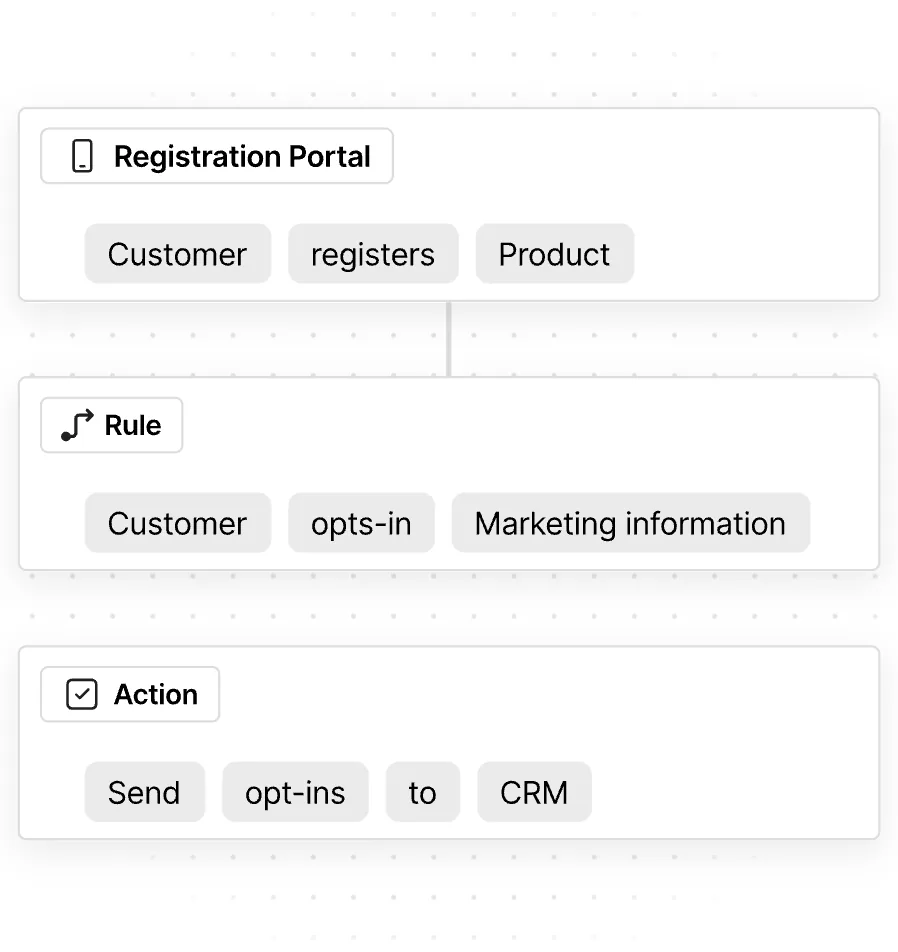
Enable marketing opt-in during warranty registration and collect valuable first-party data while customers are engaged with your brand. Build your customer database compliantly, with clear consent and GDPR compliance built in.
Automated Warranty Rules Across Markets
Operating in multiple regions with different warranty terms? Claimlane applies the correct warranty period automatically. 2 years for EU consumers. 3 years in Spain. 1 year for B2B. No manual intervention. No compliance mistakes.
Built for Complex Operations
Claimlane handles the complexity that kills in-house projects: multi-language support, proof-of-purchase validation, extended warranty payment flows, fraud detection, API integrations with major ecommerce platforms, and analytics dashboards. Registration data becomes operational insight.
Brands like Black Diamond, Konges Sløjd, and Luksusbaby use Claimlane to manage thousands of warranty registrations and claims across multiple markets and channels. The platform is trusted by leading retailers and brands to solve complex aftersales cases that would overwhelm manual processes or basic homegrown systems.
AI-Assisted Claims From Day One of Coverage
The 2026 shift in warranty operations: AI handles parts of a case that used to need a trained agent. Claimlane's AI Agent, the first AI agent purpose-built for warranty claims and returns, reads photos and videos at intake, applies brand and supplier rules, and recommends or auto-resolves cases. For brands running warranty registration, the AI Agent picks up automatically when a registered customer files a claim. The product details, purchase date, and warranty terms are already on file from registration, so the AI moves straight to defect classification and resolution. Cases that used to take 10-45 minutes resolve in seconds.
Making Your Decision
Warranty registration is a strategic choice that depends on your specific business context. The decision should be based on clear analysis of your product category, customer base, operational capabilities, and market context.
tart with optional registration and clear incentives. Evaluate customer response and data quality. Then decide whether mandatory registration is the right next step. This experimental approach allows you to gather real-world insights specific to your products and customer base.
Frequently asked questions about warranty registration
Should warranty registration be mandatory or optional?
Most successful programs make registration optional but incentivised. Mandatory registration creates friction that hurts customer experience. Optional registration with extended warranty periods, priority support, or exclusive benefits as incentives captures willing participants without alienating customers who resist additional steps. Registration rates may be lower than mandatory programs, but data quality is higher because customers actively choose to engage.
What information should warranty registration collect?
The minimum useful set is name, email, purchase date, retailer, and product serial number. Anything beyond that should serve a specific operational purpose: address for shipping replacement parts, phone for urgent recalls, marketing opt-in for promotional communications. Asking for more than necessary lowers completion rates without adding business value.
How does GDPR affect warranty registration?
Under GDPR, brands need a lawful basis for processing customer data. For the warranty registration itself, contractual necessity applies. For marketing communications collected during registration, explicit opt-in consent is required, with the opt-in clearly separated from the warranty registration itself. Customers must be able to withdraw consent and request data deletion. Non-compliance penalties can reach €20 million or 4% of annual revenue.
What's the average warranty registration completion rate?
Industry averages hover around 10-20% for traditional registration forms. Mobile-optimised registration with QR code scanning and pre-populated fields can reach 40-60%. High-value product categories (commercial equipment, premium electronics) consistently see registration rates well above category averages because customers want documented coverage on significant purchases.
Can AI help with warranty registration and claims?
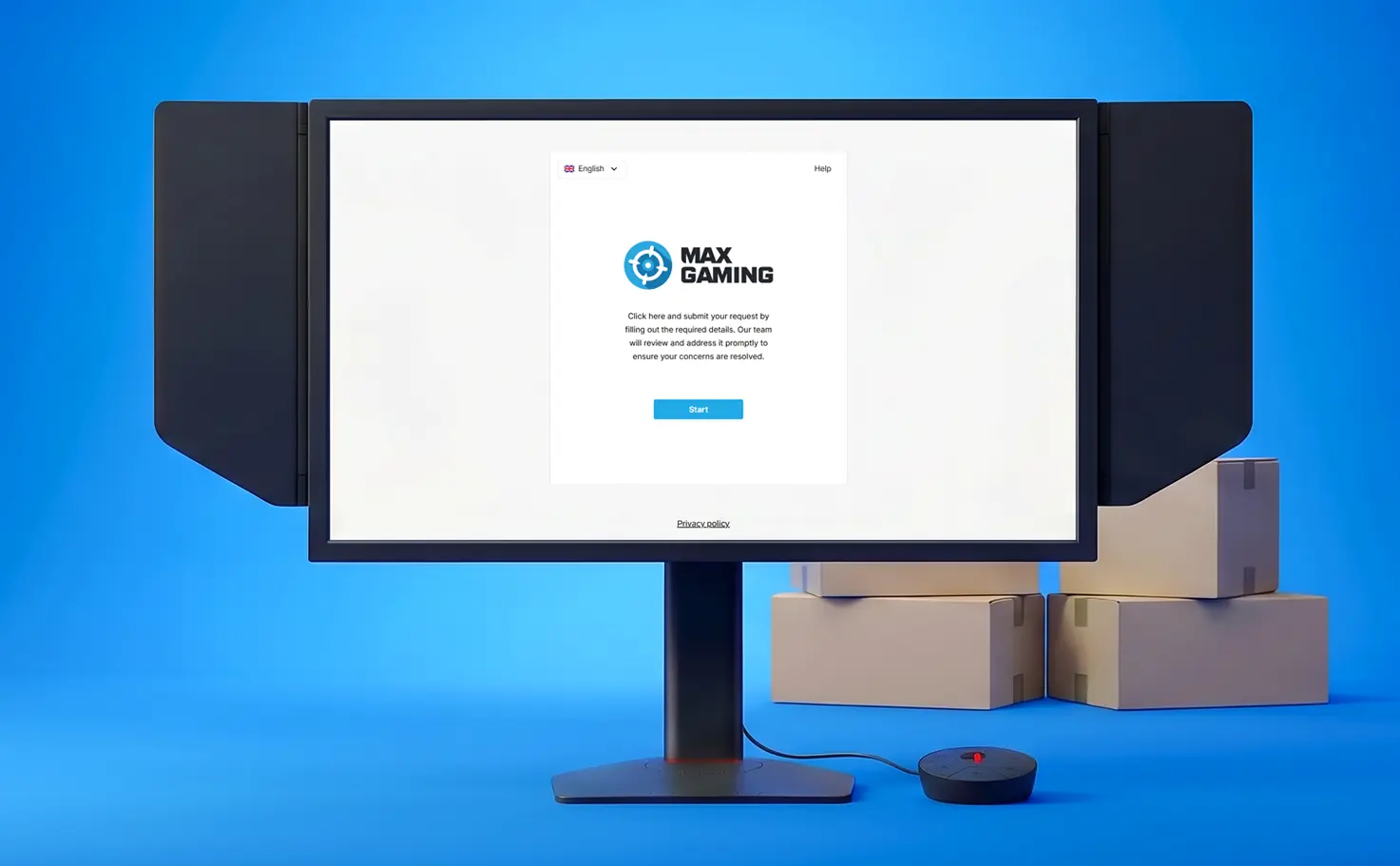
Yes. AI handles two parts of the warranty journey particularly well. At intake, AI pre-populates registration fields from QR codes and order data, reducing customer friction. At claim time, AI reads photos and videos, applies brand and supplier rules, and recommends resolutions in seconds. Claimlane's AI Agent is the first AI agent purpose-built for warranty claims and returns, and it cut MaxGaming's complex RMA resolution time by 77% after deployment.
Should B2B brands offer warranty registration?
Yes, almost always. B2B customers expect documented warranty coverage for accounting, insurance, and operational purposes, and they're more willing to complete registration than retail consumers. The barrier is lower, the value proposition is clearer, and the data collected is typically richer because business customers register more deliberately.
When should a brand build warranty registration in-house vs buy?
Build in-house only if warranty registration is a small, single-market, low-volume operation with minimal compliance complexity. Buy when there's multi-market warranty term variance, multi-channel sales (DTC plus retail), GDPR or other privacy compliance, fraud detection needs, integration with claims management, or extended warranty payment flows. The complexity adds up fast and ongoing maintenance becomes the hidden cost.
Does warranty registration prevent fraud?
It significantly reduces fraud rather than fully preventing it. Registration creates a documented purchase trail linking customer to retailer, purchase date, and serial number, which makes serial claimers and counterfeit-product claims much harder to file. Combined with photo intake and AI-based defect classification, fraud detection accuracy improves substantially over email-based claims handling.
.webp)